Last updated June 30, 2026
Garage Door Permits, Codes & Inspections in FL: What You Need to Know
Most Orlando homeowners assume that replacing a garage door is a straightforward swap — old door out, new door in, done. What they don’t know is that Florida’s building code classifies a full garage door replacement as a structural alteration subject to permitting, wind-load certification, and a county inspection. We’ve watched this play out at the worst possible moment: a seller is two weeks from closing in Conway or Windermere, a 4-point inspection flags an unpermitted door replacement from three years ago, and suddenly the deal is in jeopardy. This guide covers everything you need to know so that moment never happens to you.
Quick Answer
In Florida, replacing a garage door — not just repairing a panel or spring — almost always requires a building permit, a wind-load-compliant product, and a post-installation inspection by your county building department. In Orange County, skipping that permit can delay or derail a home sale, void storm-damage insurance claims, and leave you personally liable for bringing the door into compliance at your own cost. The permit process typically takes 5–15 business days and costs $75–$200 in most Orange County jurisdictions.
Table of Contents
- When Does a Garage Door Replacement Require a Permit in Florida?
- The Orange County Permit Process: Step by Step
- Florida Wind-Load Requirements and What Your Door’s Documentation Should Show
- How an Unpermitted Garage Door Affects Your Homeowner’s Insurance
- What to Do If the Work Was Already Done Without a Permit
- What Happens During a Garage Door Inspection in Orange County
- Common Mistakes to Avoid
- When to Call a Professional
- Frequently Asked Questions
- The Bottom Line
When Does a Garage Door Replacement Require a Permit in Florida?
This is the question every homeowner deserves a straight answer to — and most contractors either don’t know it precisely or don’t volunteer it because permits slow down their job cycle.
The threshold under the Florida Building Code is this: replacing a garage door in its entirety — the door panels, the frame it sits in, or both — is a regulated alteration to a structural opening in your home’s envelope. That triggers a permit requirement in virtually every Florida jurisdiction, including all of Orange County. Repairing individual components does not, with some nuance:
- Permit NOT required: Replacing a broken spring, cable, roller, or hinge. Swapping out a damaged panel on an existing door (same door, same opening, no structural change). Repairing or replacing a garage door opener. Adjusting weatherstripping or bottom seals.
- Permit REQUIRED: Installing a new garage door in place of an existing one, even if the opening size doesn’t change. Widening or modifying the rough opening. Adding a new garage door opening where one didn’t exist before. Replacing a door that was previously unpermitted (this triggers compliance with current code).
The line Florida Building Code draws is essentially: if you’re replacing the door assembly as a unit, you’re replacing a component of the building envelope, and that requires code-compliant documentation, a permit, and an inspection. In Central Florida, where hurricane preparedness requirements have tightened significantly since 2004, the wind-load component of that compliance is non-negotiable.
One detail worth knowing: “like-for-like” replacement does not exempt you from permitting in Florida the way it might in some northern states. Even if you’re putting in the exact same model door, a full replacement in Orange County requires you to pull a permit and get it inspected.
The Orange County Permit Process: Step by Step
Orange County’s Building Division handles garage door replacement permits through its online permitting portal, Orange County EPM (Electronic Plan Management). Here is the practical sequence for a residential garage door replacement:
- Determine who pulls the permit. In Florida, a permit for structural work must be pulled either by a licensed contractor or by the homeowner acting as their own general contractor (an “owner-builder” exemption). If you hire a contractor — as most homeowners do — the contractor is legally responsible for obtaining the permit before work begins. Always confirm this before any work starts.
- Gather product documentation. Your installer needs the manufacturer’s Florida Product Approval (FPA) number for the specific door being installed. Every garage door sold legally in Florida must have a Florida Product Approval on file with the Florida Building Commission, confirming it meets the wind-load and structural requirements for your wind zone. Amarr, Wayne Dalton, Raynor, and other major manufacturers publish these approval numbers on their specification sheets.
- Submit the permit application. The application through Orange County’s portal requires: property address and parcel ID, contractor license information (or owner-builder affidavit), Florida Product Approval number for the door, and a simple site plan or diagram showing which opening is being altered.
- Pay the permit fee. Orange County residential garage door permits typically run $75–$200 depending on the project valuation. Your contractor should be able to tell you the exact fee at the time of application.
- Wait for permit approval. Standard residential permits in Orange County are typically approved in 5–15 business days through the electronic review process. Some straightforward replacements in unincorporated Orange County have been approved faster; projects in incorporated cities like Orlando proper may follow slightly different timelines through the City of Orlando’s permitting office.
- Schedule the installation. Work cannot legally begin until the permit is issued. After installation, the permit card (or electronic equivalent) must be available on-site.
- Schedule and pass the inspection. After the door is installed, request a final inspection through the county portal. An inspector visits the property, verifies the installation matches the permitted product, and signs off. You receive a Certificate of Completion, which is the document that clears this permit for your property record.
Keep the Certificate of Completion. It belongs in your permanent home file alongside your deed, survey, and other closing documents. When you sell the home, this is what proves the work was done legally and to code.
Florida Wind-Load Requirements and What Your Door’s Documentation Should Show
Garage doors are Florida’s most hurricane-vulnerable structural opening. A door that fails under wind pressure doesn’t just destroy the door — it allows catastrophic pressure changes inside the structure that can lift a roof. That’s why the Florida Building Code’s wind-load requirements for garage doors are among the strictest in the country, and why proper documentation matters as much as the installation itself.
What wind zone applies to Orlando and Orange County? Most of unincorporated Orange County and the City of Orlando falls in Wind Zone II under the Florida Building Code, with a design wind speed of 120–130 mph depending on the specific location and exposure category. Coastal and southern Florida areas face higher requirements, but even at 120 mph design speed, not every door on the market qualifies.
What documentation your installer must provide:
- Florida Product Approval (FPA) Number: Every door model must have a current approval on file with the Florida Building Commission. This is searchable at floridabuilding.org. Your permit application will reference this number.
- Product Approval Data Sheet: The specific sheet for your door model, showing the maximum opening dimensions, design pressure ratings (positive and negative), and approved installation conditions.
- Installation specifications: Documents showing required track gauge, spring type, hardware, and anchorage to the structural rough opening. These must match what’s installed.
- Manufacturer’s installation certificate: Many manufacturers provide a signed or stamped certificate confirming the door was installed per approved specifications. This is what the inspector is checking against.
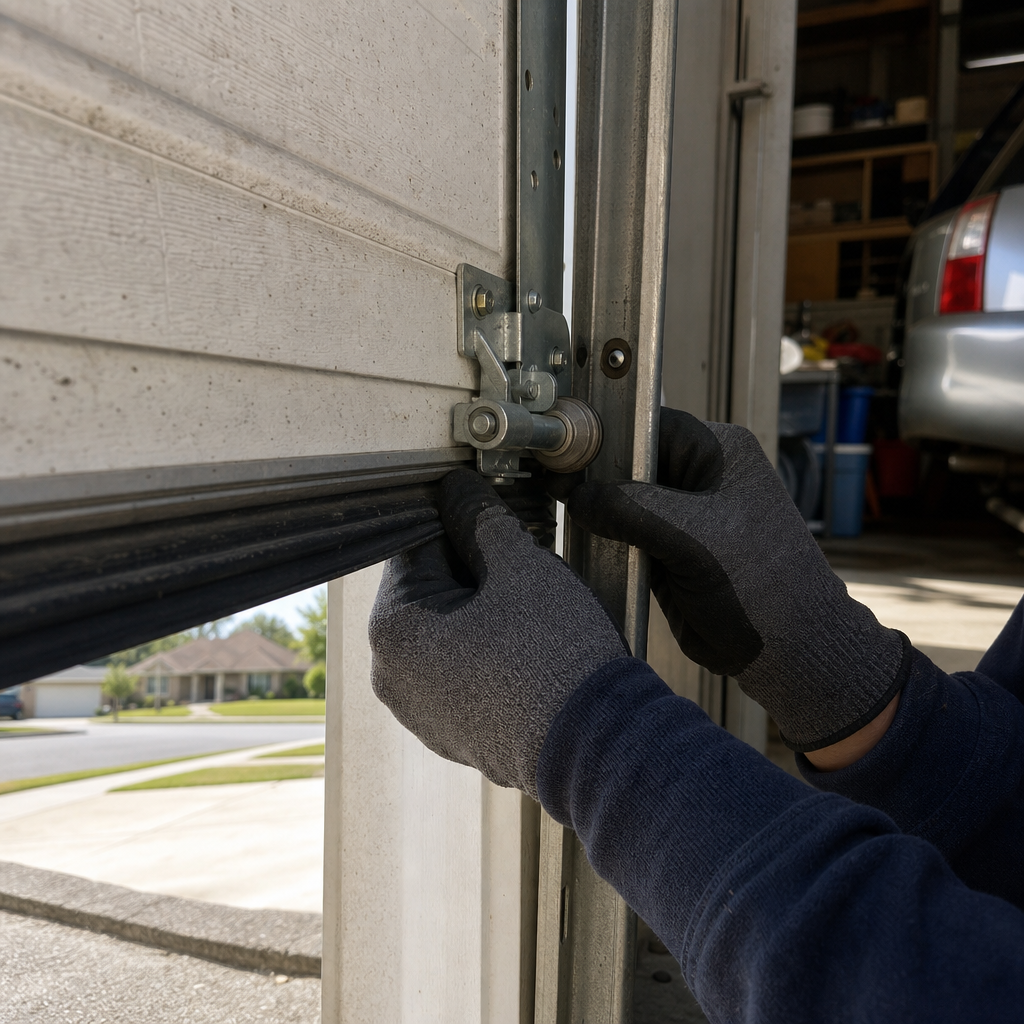
A word of caution: garage door spring and cable systems operate under extreme tension — a standard torsion spring on a two-car door holds hundreds of pounds of stored energy. The wind-load hardware installation involves properly tensioned and anchored assemblies that should only be handled by a trained technician. We flag this because some homeowners, trying to save money, attempt DIY installation and end up with a door that won’t pass inspection — or, worse, one that fails dangerously. This is work that warrants a professional.
How an Unpermitted Garage Door Affects Your Homeowner’s Insurance
This is the part most homeowners in Orlando don’t find out until they file a claim — and by then it’s too late to fix easily.
Florida homeowner’s insurance policies contain language requiring that covered structures comply with applicable building codes. When you file a storm-damage or hurricane claim, a claims adjuster has the right to review the permit history of your home. If they discover your garage door was replaced without a permit and without code-compliant wind-load documentation, your insurer can:
- Deny the claim entirely on the basis that the door was not code-compliant and therefore not an insurable loss in its current condition.
- Reduce the payout to account for the fact that a proper replacement would need to be brought into compliance anyway.
- Flag the property for non-renewal if unpermitted work suggests broader code-compliance issues.
Florida’s post-hurricane claims environment has made adjusters more rigorous, not less. After major storm seasons, adjusters in the Orlando area and across Central Florida have become accustomed to checking permit histories on structural components — including garage doors — before approving large claims. A $200 permit fee that homeowners skip to save time becomes a $4,000–$8,000 out-of-pocket replacement cost when an unpermitted door gets denied under a claim.
There’s also the 4-point inspection to consider. Any home over 25–30 years old in Florida typically requires a 4-point inspection for insurance purposes, and many insurers now request them on homes as young as 10–15 years in Central Florida. The 4-point covers roof, electrical, plumbing, and HVAC — but an unpermitted structural alteration flagged during a home sale inspection is a separate issue that can surface at closing just as painfully.
What to Do If the Work Was Already Done Without a Permit
This comes up regularly in our experience with Orlando-area homeowners, particularly those who bought a house and later discovered a previous owner had a door replaced by a contractor who never pulled a permit. Here’s what your options look like:
- Check the permit history first. Orange County’s permit records are searchable online through the county’s property records portal. Search by address and look for any garage door or building envelope permits. If there’s nothing on record for the year the door appears to have been replaced, that’s your answer.
- Consult a licensed garage door contractor. They can assess whether the installed door has a current Florida Product Approval and whether it was installed to compliant specifications. If the door is a recognized brand like Amarr or Wayne Dalton with a current FPA, the path to retroactive permitting is cleaner.
- Apply for a retroactive (after-the-fact) permit. Orange County does process these. You’ll pay the standard permit fee plus, in some cases, a penalty — typically 2x or 4x the standard fee, depending on how far out of compliance the work is and whether it was willful. The inspector will assess the installed door against current code requirements.
- If the door fails inspection: If the installed door doesn’t meet current wind-load requirements or lacks documentation, it will need to be replaced with a compliant product and re-permitted. This is the expensive scenario — but it’s better discovered before a sale than after a hurricane claim denial.
- Get it cleared before listing. Real estate attorneys in Orlando routinely advise sellers to resolve open permits or unpermitted work before listing. Buyers’ attorneys have access to the same permit databases. A cleared permit is worth more than the cost of obtaining it when a sale is on the line.
If you’re buying a home in the Conway, College Park, or Baldwin Park areas of Orlando and suspect a door replacement may be unpermitted, request a permit search as part of your due diligence period. It’s a five-minute search that can prevent a significant closing-table headache.
What Happens During a Garage Door Inspection in Orange County
Many homeowners have never been through a building inspection and aren’t sure what to expect. A garage door final inspection in Orange County is typically a 15–20 minute visit. Here’s what the inspector will check:
- Permit on site: The permit (or electronic confirmation) must be accessible at the property.
- Door model vs. approved product: The inspector will verify the installed door’s manufacturer, model, and any rating labels against the Florida Product Approval referenced in the permit application. The FPA sticker is usually applied to the door by the manufacturer.
- Installation compliance: Track attachment, spring assembly type, hardware gauge, and anchorage to the rough opening are compared against the approved installation specifications for that door model.
- Operation: The inspector will typically operate the door manually and, if an opener is present, confirm basic operation. They’re not testing the opener itself but confirming the door operates correctly in the opening.
- Weather seal and perimeter fit: The bottom seal and side/top weatherstripping should be present and properly fitted — they’re part of the door assembly’s code-compliant installation.
If everything checks out, the inspector marks the permit final and the county issues a Certificate of Completion, which appears on the property’s permit history record permanently. That’s the clean paper trail that protects you at resale and on insurance claims.
If the inspector finds a deficiency, you’ll receive a written correction notice. Common correction items we’ve seen in Orlando include: missing or incorrect anchoring hardware, a door model that doesn’t match the permit application (someone substituted a different product in the field), and missing FPA labels on the door itself.
Common Mistakes to Avoid
- Letting the contractor talk you out of pulling a permit. Some contractors push back on permits because it adds time and administrative work to their job cycle. In Florida, skipping the permit is your legal exposure, not theirs — the property record follows the home, not the contractor.
- Assuming “same size door” means no permit needed. Florida’s code triggers on replacement of the door assembly, not on whether the opening dimensions change. A like-for-like swap still requires a permit.
- Not requesting the Florida Product Approval documentation before installation. If your installer can’t hand you the FPA number and data sheet for the specific door going on your home, stop and ask why. No FPA means no permit approval means no legal installation.
- Filing a storm claim on an unpermitted door. In Orange County and across Central Florida, this is how homeowners end up with denied claims and an out-of-pocket replacement. The time to get the permit is before the storm, not after.
- Ignoring unpermitted work discovered during a purchase inspection. A flagged unpermitted door replacement is a negotiating point and, in some cases, a deal-breaker. Buyers who waive this and close anyway inherit the problem — including any retroactive permit penalties.
- Assuming older doors are grandfathered. Florida’s code allows existing non-compliant structures to remain in place unless they are replaced. The moment you replace a door — even one that pre-dates current wind-load requirements — you’re required to bring the new installation into current code compliance.
- Skipping the final inspection because “the door works fine.” The permit isn’t closed until the inspection is passed and the Certificate of Completion is issued. An open permit on your property record is a flag that shows up in title searches and can complicate refinancing and resale in the Orlando market.
When to Call a Professional
Call a licensed garage door contractor — not a general handyman — any time the work involves a full door replacement, modifications to the rough opening, or any situation where a permit will be required. In Orange County, the contractor pulling the permit is legally accountable for the installation passing inspection, which means a professional with real skin in the game.
You also need a professional when you’re trying to resolve an unpermitted replacement from a previous owner. Navigating Orange County’s retroactive permit process, assessing whether the installed door meets current wind-load requirements, and knowing which brands and models have current Florida Product Approvals — that’s specialized knowledge that general contractors rarely have.
Shield Garage Door Solutions Orange County offers free estimates in Orlando and the surrounding area. Paul Johnson has been handling permitted garage door installations in Central Florida since 2004 and can walk you through exactly what the permit process looks like for your specific job. Call (689) 400-8360 — no obligation, straight answers.
Frequently Asked Questions
Yes, in almost every case. Replacing a garage door assembly — the door itself, not just a spring or panel — is a structural alteration to your home’s building envelope under the Florida Building Code, and it requires a permit, a code-compliant product with a Florida Product Approval number, and a final inspection. Repairs to springs, cables, rollers, or openers do not require a permit. Call (689) 400-8360 for a free estimate and we’ll confirm exactly what your job requires before any work starts.
Orange County residential garage door replacement permits typically cost $75–$200, depending on the declared project valuation. If you’re within the City of Orlando limits rather than unincorporated Orange County, fees are similar but processed through the City of Orlando’s permitting office. That fee is a small fraction of the out-of-pocket exposure you face on a denied insurance claim or a closing-table complication. Call (689) 400-8360 and we can give you a precise estimate for your address.
Standard residential permits through Orange County’s electronic permitting portal typically take 5–15 business days from application to approval. Straightforward replacements in unincorporated Orange County have occasionally moved faster; projects requiring plan review for modified openings may take longer. Factor this timeline into your project planning — installation cannot legally begin until the permit is issued.
A Florida Product Approval (FPA) is a state-level certification confirming that a specific product — including garage door models — has been tested and approved for use in Florida’s building environment, including its wind-load and structural requirements. Every garage door installed in Florida must have a current FPA on file with the Florida Building Commission. Without it, a door cannot be legally installed, the permit application cannot be approved, and the installation will not pass inspection. Brands like Amarr and Wayne Dalton maintain current FPA documentation on all models sold in Florida.
It can — significantly. Florida homeowner’s insurance policies require covered structures to comply with applicable building codes. After a hurricane or storm event, adjusters reviewing claims in the Orlando area have the right to check permit histories on structural components. An unpermitted garage door replacement can be grounds for a claim denial or reduced payout on storm damage to that door or related structure. Getting the permit isn’t just a legal formality; it’s what keeps your coverage intact when you need it most.
You can apply for a retroactive permit through Orange County’s Building Division. You’ll pay the standard permit fee plus a penalty — typically 2x to 4x the base fee depending on circumstances. An inspector will assess whether the installed door meets current wind-load and code requirements. If it does, the permit can be closed and the record cleared. If it doesn’t, the door will need to be replaced with a compliant product. We recommend addressing this before listing the home — a clean permit record is worth the effort when Orlando’s real estate market moves fast and buyers’ inspectors are thorough.
The Bottom Line
Florida’s garage door permit requirements aren’t bureaucratic red tape — they exist because garage doors are the largest and most hurricane-vulnerable openings in a residential structure. In Orlando and across Orange County, skipping a permit on a full door replacement creates real exposure: denied insurance claims, closing-table complications, and out-of-pocket retroactive compliance costs. The permit process through Orange County is straightforward when you’re working with a contractor who knows it. The wind-load documentation, the Florida Product Approval number, the final inspection — these are the steps that protect your home, your insurance, and your investment. Do it right the first time, keep your Certificate of Completion, and it’s a non-issue forever.
If you’re planning a Garage Door Installation in Conway or anywhere else in the Orlando area, or if you need help sorting out an unpermitted replacement from a previous owner, call Shield Garage Door Solutions Orange County at (689) 400-8360. Paul Johnson handles permitted installations personally — 22 years in this trade, 436 five-star reviews, and a process that doesn’t cut corners on the steps that protect you. Free estimates, straight answers, no runaround.
For Garage Door Repair in Conway or questions about your existing door’s compliance, the same number reaches the same person. And if you need a Garage Door Opener in Conway assessed for code compliance alongside a new door installation, we handle that in the same visit.
Written by Paul Johnson, Owner & Lead Technician at Shield Garage Door Solutions Orange County, serving Orlando since 2004.